
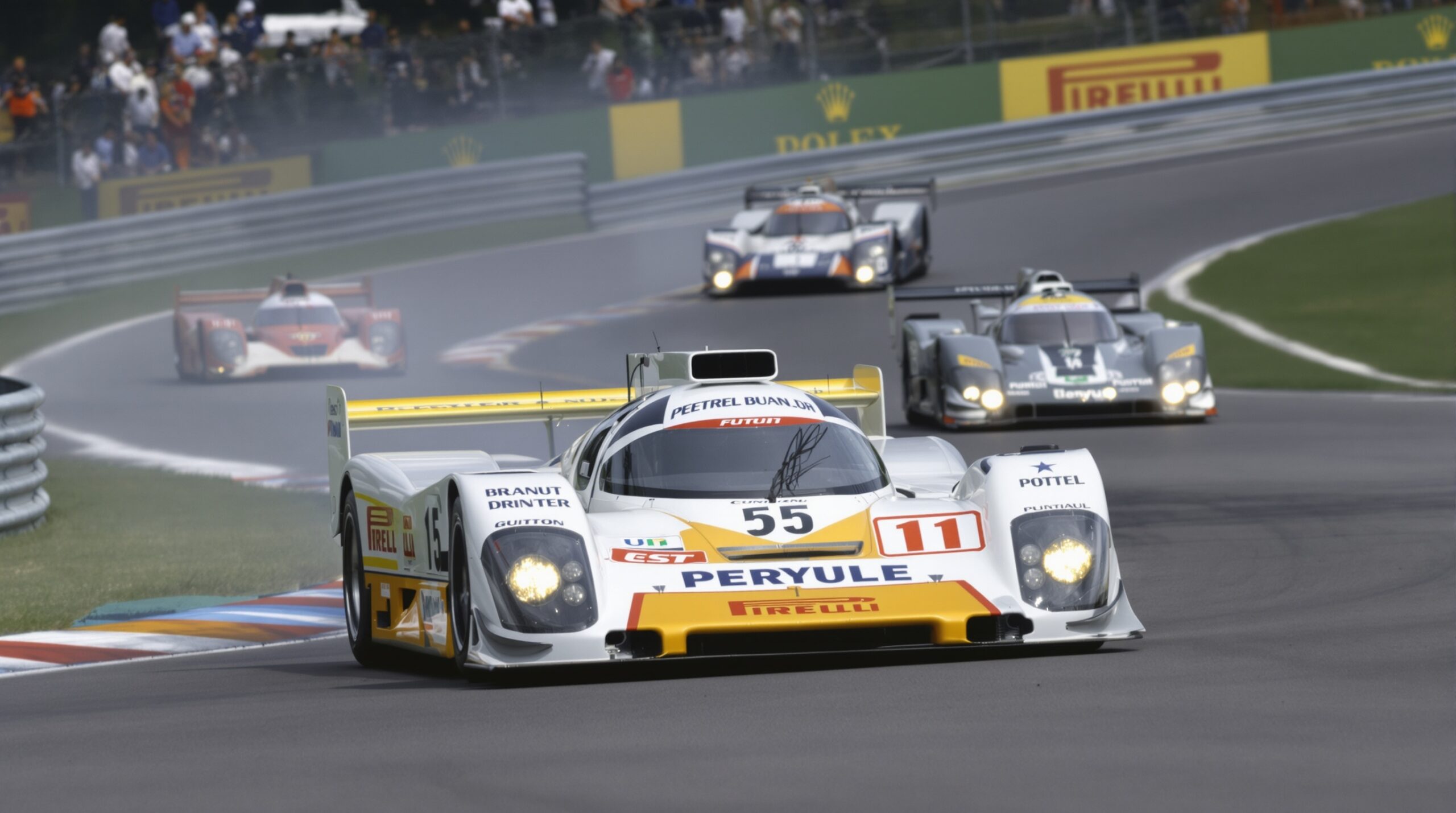
Endurance racing has always been a reflection of technological progress. From the powerful Group C and GTP machines of the past to today’s hybrid Hypercars, the sport has continuously evolved to match innovation and safety requirements. What began as a test of mechanical durability and driver stamina has transformed into one of the most advanced and competitive forms of motorsport in the world.
The Golden Era of Group C and GTP
The 1980s and early 1990s are often considered the golden age of endurance racing. During this period, Group C in Europe and GTP in North America dominated the scene. These cars were built with minimal restrictions, allowing manufacturers to push the limits of engineering and performance.
Group C regulations focused on fuel consumption rather than engine size, which led to highly efficient yet incredibly powerful machines. Legendary cars like the Porsche 962 and Sauber-Mercedes C9 became icons of speed and innovation. These prototypes could exceed speeds of 400 km/h on long straights such as the Mulsanne at Le Mans.
In the United States, IMSA’s GTP class followed a slightly different approach but maintained the same spirit of innovation. Manufacturers like Nissan, Jaguar, and Toyota introduced cutting-edge technologies, including advanced aerodynamics and turbocharged engines.
However, with minimal safety restrictions and ever-increasing speeds, concerns began to grow. The cost of development also skyrocketed, making it difficult for smaller teams to compete. By the early 1990s, the Group C era came to an end, marking a turning point for endurance racing.
The Rise of LMP Prototypes
Following the decline of Group C, endurance racing transitioned into a new era with the introduction of Le Mans Prototype (LMP) classes. These cars were designed to balance performance, safety, and cost control.
LMP1 and LMP2 categories became the backbone of endurance racing throughout the late 1990s and 2000s. Unlike the unrestricted Group C machines, LMP cars were subject to stricter regulations, including limits on aerodynamics, engine size, and fuel usage.
Despite these limitations, innovation remained at the core of the sport. Manufacturers like Audi revolutionized endurance racing with the introduction of diesel-powered prototypes. The Audi R10 TDI proved that alternative technologies could be both competitive and efficient, winning multiple Le Mans titles.
Later, hybrid technology began to emerge. Cars like the Porsche 919 Hybrid and Toyota TS050 Hybrid showcased the future of motorsport by combining internal combustion engines with electric power systems. These vehicles were not only fast but also incredibly efficient, setting new benchmarks for performance.
The Hybrid Revolution
The 2010s marked the beginning of the hybrid era in endurance racing. With increasing pressure from environmental regulations and the automotive industry’s shift toward electrification, racing series adapted accordingly.
The FIA World Endurance Championship (WEC) introduced regulations that encouraged manufacturers to develop hybrid systems. This led to some of the most technologically advanced race cars ever built.
Hybrid LMP1 cars utilized energy recovery systems, capturing energy from braking and exhaust gases to power electric motors. This allowed for significant performance gains while reducing fuel consumption.
The competition between manufacturers such as Porsche, Audi, and Toyota during this period was intense. Each brand invested heavily in research and development, turning endurance racing into a testing ground for road car technology.
However, the cost of competing at this level became extremely high. Several manufacturers eventually withdrew from the sport, leading to the need for a more sustainable and accessible class structure.
The Birth of Hypercars
To address rising costs and attract new manufacturers, endurance racing introduced the Hypercar class. This new category aimed to combine performance, cost efficiency, and road car relevance.
Unlike LMP1 prototypes, Hypercars are designed to have a closer visual and technological connection to production vehicles. This allows manufacturers to showcase their brand identity while maintaining competitive performance.
The Hypercar regulations also significantly reduced development costs compared to the previous LMP1 era. This made it easier for both established manufacturers and new entrants to participate in top-level endurance racing.
Cars like the Toyota GR010 Hybrid, Ferrari 499P, and Peugeot 9X8 represent the new generation of endurance racing machines. These vehicles feature advanced hybrid systems, sophisticated aerodynamics, and cutting-edge materials.
At the same time, the introduction of the LMDh (Le Mans Daytona hybrid) platform has further expanded the field. This approach allows manufacturers to compete in both the WEC and IMSA championships using a common chassis and hybrid system, reducing costs and increasing global participation.
Technology Transfer to Road Cars
One of the key reasons endurance racing remains relevant is its role in developing new automotive technologies. Many innovations first tested on the track eventually make their way into production vehicles.
Turbocharging, hybrid systems, lightweight materials, and advanced aerodynamics all have roots in endurance racing. Manufacturers use the sport as a laboratory to test new ideas under extreme conditions.
For example, hybrid systems developed for LMP1 and Hypercars have directly influenced the design of modern hybrid road cars. Similarly, advancements in energy efficiency and battery technology continue to shape the future of the automotive industry.
Safety and Sustainability
Safety has always been a critical factor in the evolution of endurance racing. From the high-speed dangers of Group C to today’s carefully regulated Hypercars, the sport has made significant progress in protecting drivers and teams.
Modern race cars are equipped with advanced safety features, including reinforced cockpits, crash structures, and sophisticated electronic systems. Track design and race regulations have also improved to reduce risks.
Sustainability has become another major focus. The introduction of hybrid technology, alternative fuels, and energy-efficient systems reflects the industry’s commitment to reducing its environmental impact.
Future regulations are expected to push this even further, with the potential for fully electric endurance racing categories in the years to come.
The Future of Endurance Racing
As endurance racing continues to evolve, the balance between innovation, competition, and sustainability will remain crucial. The current Hypercar era has already attracted major manufacturers such as Ferrari, Porsche, Cadillac, and BMW, signaling a strong future for the sport.
With global collaboration between series like WEC and IMSA, endurance racing is becoming more accessible and competitive than ever before. Fans can expect closer racing, diverse grids, and continued technological breakthroughs.
From the raw power of Group C machines to the sophisticated hybrid Hypercars of today, endurance racing has undergone a remarkable transformation. Yet, at its core, it remains a true test of performance, strategy, and endurance.
And as technology continues to advance, the next chapter of this incredible motorsport discipline is only just beginning.